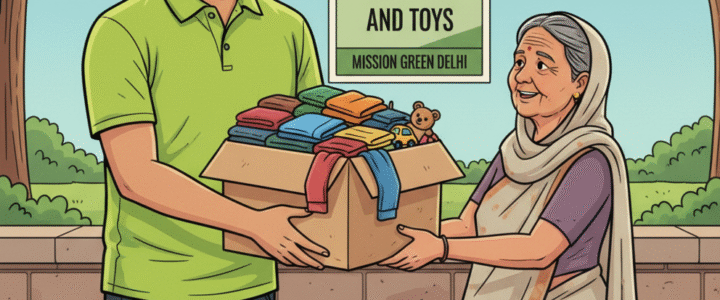
Clothes Recycling and Donation in Delhi: A Step Toward a Sustainable Future

Clothes Recycling and Donation in Delhi: A Step Toward a Sustainable Future

Delhi, a city known for its energy, culture, and diversity, also carries the weight of being one of India’s fastest-growing urban hubs. With rapid growth comes increasing consumption—and unfortunately, increasing textile waste. Every season, thousands of kilograms of clothes end up in landfills, even though most of them could be reused, upcycled, or recycled.

But there’s good news: Delhi is emerging as a leader in clothes donation, recycling, and circular fashion initiatives, thanks to conscious citizens and NGOs who are working tirelessly to give discarded clothes a second life.

Now Delhi Is Changing the Game

Delhi is home to several innovative organizations and citizen-led movements that make it easier than ever to donate or recycle clothes responsibly.

1. Goonj

One of India’s most respected NGOs, Goonj has transformed clothing donation into a structured, dignified process.

  • They run “Cloth for Work” initiatives where donated clothes support rural development activities.
  • They accept clothing, shoes, household fabric, toys, and more.
  • Their drop-off centers are conveniently located across Delhi NCR.

Please check drop-off centers at this link https://goonj.org/dropping-centres/

2. Uday Foundation

Uday Foundation, a well-known charitable organization based in Delhi. Uday Foundation supports underprivileged children, patients, and families in need by distributing donated essentials throughout the year. They accept all kinds of wearable summer and winter clothes for both children and adults. You can drop your contributions at their collection centre located at D-233, Sarvodaya Enclave, New Delhi – 110017. Your small act of kindness can bring warmth, comfort, and dignity to someone who truly needs it.

For more information visit https://www.udayfoundation.org/delhi-donate-old-clothes/


3. Navjeevan Vihar Zero Waste Colony

Navjeevan Vihar, a small yet forward-thinking colony in South Delhi, has emerged as one of the city’s proud zero-waste communities. Through disciplined waste segregation, composting, and strong resident participation, the colony has drastically reduced the amount of garbage sent to landfills. One of its thoughtful initiatives includes collecting old clothes—but in limited numbers—to ensure only usable, good-quality items are passed on responsibly. By focusing on mindful donation, sustainable habits, and community-led action, Navjeevan Vihar has set a powerful example of how urban neighborhoods can move toward cleaner, greener, and zero-waste living.

Navjeevan Vihar RRR Center – Delhi
Colony Entry Gate No 1 – 24×7 Drop Off
Contact: Montu: +91 95609 16712

Why Waste Wednesdays Foundation (WWWF) is a women-led Section 8 non-profit organization, established in 2021, with a mission to address pressing environmental challenges through innovative and impactful solutions. Guided by the principles of sustainability and inclusivity, WWWF works at the grassroots level to promote eco-conscious practices and empower communities, particularly women and youth, to take ownership of environmental conservation.

For more information visit https://www.whywastewednesdays.com/

3. Zero Foundation

Zero Foundation in Uttam Nagar provides a responsible way to recycle your used clothes and undergarments—just make sure they’re freshly washed before dropping them off. They ensure proper sorting and recycling with dignity. You can also donate your used or new books for ages 6 and above, all the way up to post-graduation, helping support education for those who need it most.

A-61, Second Floor, Auto Market, Dal Mill Road, Opposite Metro Pillar Number 685, Uttam Nagar West Metro Station, New Delhi – 110059.
Contact: Ajay Mehra: +91-99119-97171


Do you also have clothes recycling or drop-off centers in Delhi NCR. Please WhatsApp your details to Puneet Verma at +919910162399 or missiongreendelhi@gmail.com.

Loading

From Waste to Resource: A Sustainable Approach to Waste Management in Delhi

From Waste to Resource: A Sustainable Approach to Waste Management in Delhi

Introduction:

Delhi, the bustling capital city of India, faces significant challenges when it comes to waste management. With a burgeoning population and rapid urbanization, the generation of waste has reached alarming levels. However, amidst these challenges, the city is making strides towards sustainable waste management practices. In this blog, we will explore the current state of waste management in Delhi and discuss innovative approaches that are being implemented to address this critical issue.

  1. The Growing Waste Challenge in Delhi:

Delhi generates a massive amount of waste every day, comprising household waste, commercial waste, and industrial waste. The improper disposal and mismanagement of this waste pose severe environmental and health hazards. Landfills are overflowing, polluting groundwater and emitting harmful gases, while waste burning contributes to air pollution. The need for an efficient and sustainable waste management system has never been more crucial.

  1. Adopting the 3R Approach: Reduce, Reuse, and Recycle:

2.1 Reduce: The first step in effective waste management is reducing waste generation at the source. Awareness campaigns and education about sustainable consumption habits are essential in encouraging individuals and businesses to minimize waste production. Initiatives like promoting reusable products, using eco-friendly packaging, and practicing responsible purchasing can significantly reduce the amount of waste generated.

2.2 Reuse: Encouraging the reuse of products and materials is another vital aspect of waste management. Delhi has witnessed the emergence of thrift stores, donation centers, and repair cafes, where items are repaired, refurbished, and sold at affordable prices. Embracing the culture of reuse not only reduces waste but also promotes a circular economy and reduces the strain on natural resources.

2.3 Recycle: Recycling is a key component of sustainable waste management. Delhi has established recycling centers and waste segregation programs to ensure that recyclable materials such as paper, plastic, glass, and metal are diverted from landfills. Creating awareness about proper waste segregation and providing convenient recycling facilities are essential for the success of recycling initiatives.

  1. Waste-to-Energy: Harnessing Renewable Resources:

Delhi is exploring waste-to-energy solutions to tackle the growing waste problem while simultaneously generating renewable energy. Waste-to-energy plants use advanced technologies to convert organic waste into biogas or electricity. These plants not only reduce the volume of waste going to landfills but also contribute to the city’s energy needs. Waste-to-energy initiatives hold great potential for Delhi to address waste management and renewable energy goals simultaneously.

  1. Involving the Community: Swachh Delhi, Swachh Bharat:

Community participation and involvement play a vital role in effective waste management. Delhi has initiated campaigns like Swachh Delhi, Swachh Bharat (Clean Delhi, Clean India) to engage citizens, raise awareness, and promote responsible waste management practices. Community clean-up drives, waste collection points, and citizen-led initiatives have become a common sight, showcasing the power of collective action.

  1. Government Initiatives and Policies:

The government of Delhi has implemented various policies and regulations to tackle waste management challenges. Initiatives like the ban on single-use plastics, construction and demolition waste management rules, and strict enforcement of waste segregation have been put in place. Additionally, the integration of technology, such as waste monitoring systems and smart waste bins, is being explored to optimize waste collection and management processes.

  1. Creating a Circular Economy:

Moving towards a circular economy is essential for sustainable waste management in Delhi. This involves minimizing waste generation, maximizing recycling and reuse, and designing products with end-of-life considerations. By promoting a circular economy mindset, Delhi can reduce its dependence on landfills and create a more sustainable and resource-efficient waste management system.

Conclusion:

Waste management in Delhi is an urgent challenge that requires a multi-faceted and holistic approach. By adopting the principles of the 3R approach, harnessing waste-to-energy solutions, involving the community, and implementing effective policies, the city can transition towards sustainable waste management practices. With continued efforts and collective action, Delhi has the potential to become a model for other cities, demonstrating how waste can be transformed into a valuable resource, paving the way for a cleaner, greener, and more sustainable future.

Loading

Delhi Environment in March 2021

Delhi Environment in March 2021

On 14th March, the youth organized a street art for the awareness of climate change in Connaught Place. Outside the Palika, the youth tried to create awareness by drawing and making art.

On the same day, Young Child Activist Licypriya Kangujam and other activists removed about 15 kg of plastic from Deer Park in Delhi. Licypriya is a nine-year old environmental activist born in the state of Manipur in North East India.

In the first week of April 2021, Delhi’s environmental activist Pravin Mishra is going to hold a workshop on domestic waste management and composting. If you want to be a part of this workshop and make Delhi a garbage free state, then please attend such workshops of Pravin Ji.

Garbage mountains are increasing in Delhi, which needs to be controlled now. Delhi people will have to introduce waste management system at the colony or local level. If it is not controlled, then the day is not far when you will see garbage on the streets of Delhi.

The best way to dispose of wet waste is to make compost which can be used to grow trees and plants to make our city greener and cleaner. For this, a decentralized community of colony or local level needs to be created which works closely with the government.

Loading

What are you looking for ?

    ×
    Connect with Us

      ×
      Subscribe

        ×